
A Personalized Approach to Depression Treatment in Dallas
Including Major Depressive Disorder (MDD)
Advanced, noninvasive rTMS for depression, guided by brain mapping and tailored to your brain.
FDA-cleared rTMS available. Personalized EEG-guided options offered.
Research on TMS for Depression
TMS is a core component of MeRT treatment. Multiple peer-reviewed studies support the safety and effectiveness of rTMS for Major Depressive Disorder, including treatment-resistant depression.
TMS Should Be Considered as First-Line Treatment For Moderate to Severe Major Depressive Disorder, in Psychiatric News, October 2022.
The article’s author, Richard A. Bermudes, reviewed a decade’s worth of studies on the effectiveness of TMS, and wrote this:
“As I read the [APA] guidelines recently and considered the number of new outcome studies conducted with TMS, I believe TMS should be considered, in addition to pharmacotherapy and psychotherapy, as a first-line treatment for patients with moderate to severe major depressive disorder.”
A retrospective chart review to assess the impact of alpha-guided transcranial magnetic stimulation on symptoms of PTSD and depression in active-duty special operations service members, 21 June 2024.
“This data provides a demonstration of significant reduction in PTSD and depression symptoms and safety with the application of a-rTMS in active-duty special operations military personnel. Expansion of targeted neuromodulation programs could be impactful for military and civilian populations.”
Efficacy of repetitive transcranial magnetic stimulation (rTMS) adjunctive therapy for major depressive disorder (MDD) after two antidepressant treatment failures, July 2023.
“Several meta-analyses proved the efficacy of rTMS treatment in MDD, which is comparable to pharmacotherapy, and may have even better tolerability. Our results strengthened that rTMS is associated with clinically relevant antidepressant effect in TRD as well, and may be a beneficial tool in the add-on treatment of patients with TRD. Furthermore, rTMS adjunctive treatment to antidepressants was found to be specifically effective in achieving full remission.”
Transcranial magnetic stimulation (TMS) for major depression: a multisite, naturalistic, observational study of quality of life outcome measures in clinical practice, July 2013.
This study found: “Conclusion: These data confirm that TMS is effective in the acute treatment of MDD in routine clinical practice settings. This symptom benefit is accompanied by statistically and clinically meaningful improvements in patient-reported QOL [quality of life] and functional status outcomes.”
Repetitive Transcranial Magnetic Stimulation for the Treatment of Resistant Depression: A Scoping Review, June 2022.
“Overall, 16 out of the 17 studies suggested that rTMS treatment was effective, safe and tolerated in TRD. For patients with TRD, rTMS appears to provide significant benefits through the reduction of depressive symptoms…”
The association between sample and treatment characteristics and the efficacy of repetitive transcranial magnetic stimulation in depression, Oct 2022.
“Data from nearly 3000 patients from 65 randomized controlled trials were included in this meta-analysis. rTMS was confirmed as efficacious in treating depression when looking at symptom reduction, response and remission.”
Efficacy of repetitive transcranial magnetic stimulation in treatment-resistant depression: the evidence thus far, August 2019.
“rTMS is rapidly gaining popularity as a treatment modality for depression. There is growing evidence to support its use in patients with depression as a monotherapy or as adjunct with pharmacotherapy. Additionally, rTMS has been found to be safe and effective in pregnant patients and elderly patients…”
Use of Transcranial Magnetic Stimulation for Depression, May 2019:
“The clinical efficacy of TMS as an antidepressant has been well established. TMS is an innovative and promising treatment modality for patients with TRD [treatment-resistent depression].”
Experimental depression treatment is nearly 80% effective in controlled study, October 28, 2021:
“In a double-blind controlled study, high doses of magnetic brain stimulation, given on an accelerated timeline and individually targeted, caused remission in 79% of trial participants with severe depression.
“A new type of magnetic brain stimulation brought rapid remission to almost 80% of participants with severe depression in a study conducted at the Stanford University School of Medicine.

TRICARE East / Humana Military Coverage
Brain Treatment Center Dallas works with Humana Military – TRICARE East for FDA-cleared rTMS for Major Depressive Disorder.
Coverage depends on eligibility, diagnosis, and plan authorization. MeRT is not covered by insurance.
Featured in Psychiatric News: The Benefits of TMS in Treating Major Depressive Disorder
An article in the October 2022 issue of the Psychiatric News provides evidence that TMS (a key component of MeRT treatment) should be considered as first-line treatment for moderate-to-severe Major Depressive Disorder.
The article’s author, Richard A. Bermudes, reviewed a decade’s worth of studies on the effectiveness of TMS. He wrote:
As I read the [APA] guidelines recently and considered the number of new outcome studies conducted with TMS, I believe TMS should be considered in addition to pharmacotherapy and psychotherapy as a first-line treatment for patients with moderate to severe major depressive disorder.”
Read the entire article on the Psychiatric News website.
Starting as a New Patient
New patients begin with two initial appointments, typically scheduled two days apart. These visits allow Dr. Miller to determine whether treatment may be appropriate and to develop a personalized plan based on diagnostic testing.
There is no obligation to proceed with treatment after testing and consultation.
Initial Testing
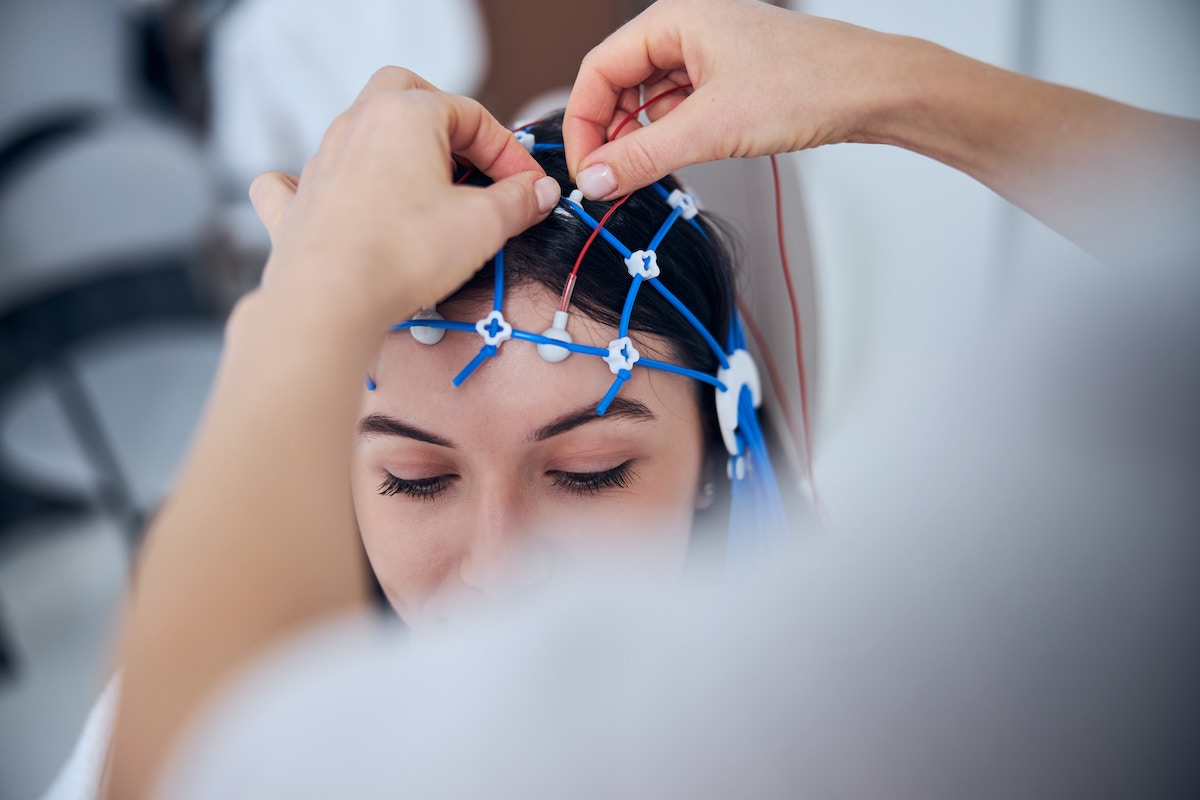
At your first appointment, we will review your reasons for seeking help, medical history, health goals, and your symptoms.You will then begin initial testing, which will involve an EEG and an EKG. These are both completely painless and easy and done right in our office. We then send your information and test results to our scientific and clinical teams, who will carefully analyze the results and determine the current state and functioning of the brain together with Dr. Miller.
We use a patented, scientific approach, leveraging neurophysiological data gathered through testing, to develop a highly customized treatment plan that supports healthy brain communication and function.
Consultation
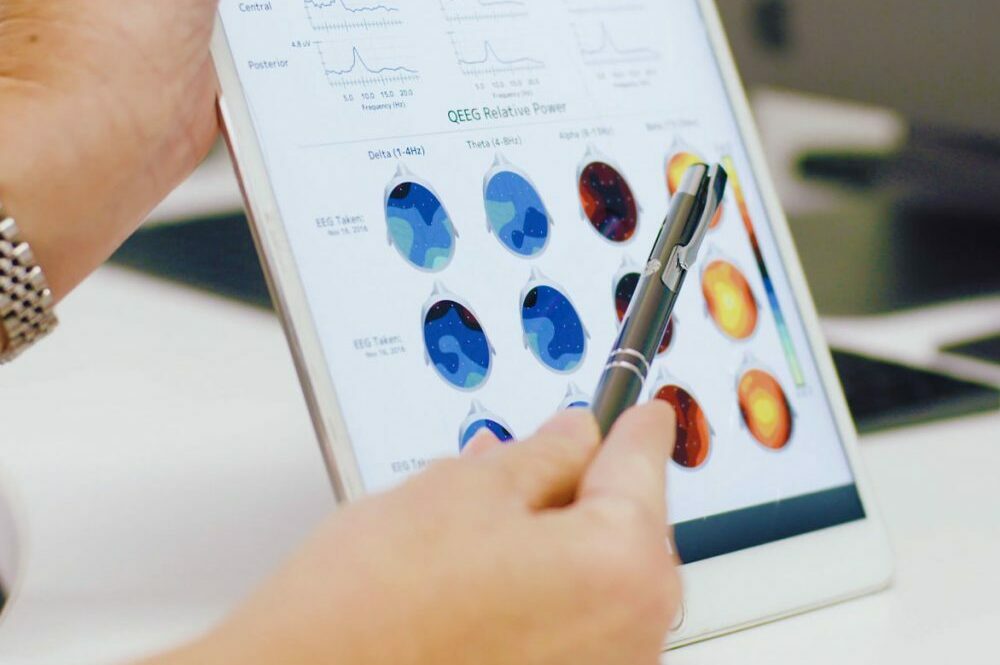
At your second appointment, you will meet with Dr. Miller for a consultation. He will discuss your test results and whether he and our scientific team feel you may achieve results through our treatment protocol. This appointment will also address questions you may have.
After the second appointment, Dr. Miller will outline your individualized treatment plan and the protocols to be followed for the best results. At that point, you may discuss fees, treatment duration, and scheduling, then decide whether to proceed.
Test Run – The Assessment
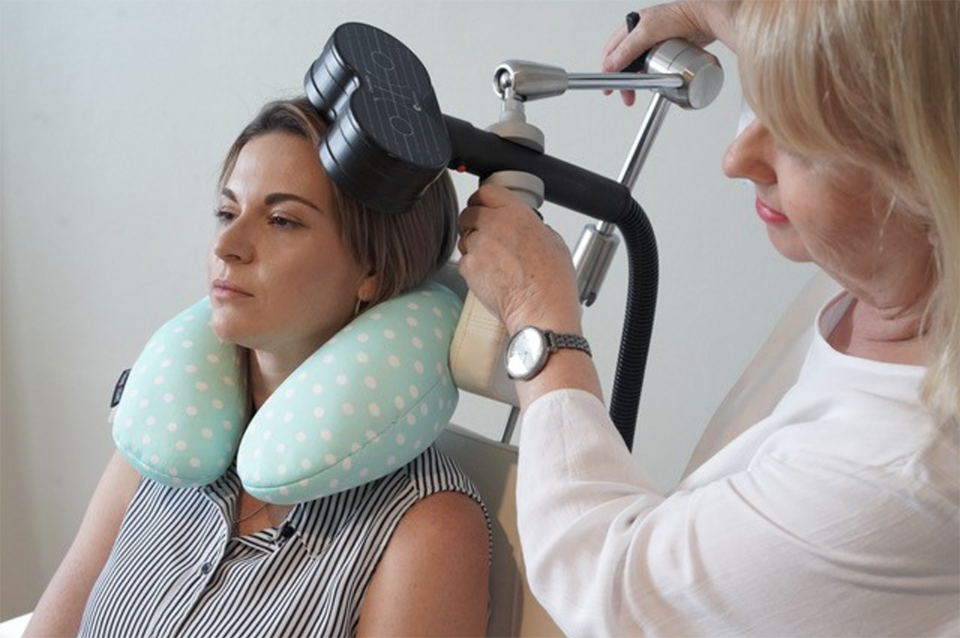
We deliver the MeRT protocol using TMS. You simply sit in a comfortable chair while a trained technician carefully positions a simple device on your head. This device produces a magnetic field to induce mild electrical currents in the targeted regions of the brain. There is no pain and no electrical currents, just a slight sensation.
We will perform an additional EEG and EKG after about a week of treatment, allowing us to assess progress and make any needed modifications. In this way, we consistently take the best, most rigorous approach based on the current neurological state.
Successes from MeRT Treatment for Depression
“My experience at the Brain Treatment Center was life-changing. I struggled through years of sleeplessness, constant worry, and struggle with everyday life. Halfway through my first treatment plan, my spirit revived.
“My loved ones, acquaintances, and people I met started to comment on my positivity and overall demeanor. I went from losing hope to cherishing every moment.
“I would urge anyone who is struggling with head injury, depression, PTSD, or any type of psychological struggle(s) to pick up the phone and inquire. Your best days are still to come.”
John G.
“For me, depression was the constant feeling of, ‘I want to quit’ and retreat to my home, except I already would be home. MeRT helped me shed this feeling in less than two weeks. I couldn’t believe I had spent so many years feeling this way!”
MeRT Patient
“Everything changed when I started treatment. Within two weeks, I was sleeping better. I was off all 12 of my meds that I was on when I started treatment, and I was starting to enjoy life again.
“After the first month, I was socializing with people again, I was able to work out for the first time in years, and I started to help my wife with the bills and our budget. A conservative estimate is that I have had a 60 – 70% reduction of the symptoms and have a whole new lease on life.
“I can focus, feel good about myself, feel confident, and laugh again. Most importantly, I can feel the love for and from my family again. I have never met a group of people who truly are solely focused on helping people feel human again. Spend a day here, and you will see a miracle.”
MeRT Patient
“I just finished six weeks of their specialized form of TMS treatment, and it is life-changing. If your depression or anxiety has been resistant to medications, therapy, or other forms of treatment, I highly recommend the Brain Treatment Center.”
Mary Ann E.
“I felt like I was alone even though I was surrounded by love and care. It was just a cloud that would linger over my life every now and again. BTC helped me understand what was going on in my head, and after a month of treatment, I was grateful to be DEPRESSION FREE and MEDICATION FREE for the first time in my life.”
MeRT Patient
Patient“For anyone suffering from depression, anxiety, and other symptoms, I highly recommend trying MeRT. My adult son, who has suffered from both problems his entire life and has been on medication, realized a positive change after the first visit. We saw dramatic improvement after each visit. This technology is truly a magic bullet.”
Harold H.
ExecutiveContact our New Patient Coordinator
When many patients come to see us, they have lost hope, as they don’t see any light at the end of the tunnel.
It’s rewarding as a practitioner to help so many people realize a much better “normal” and improved quality of life.
If you have questions or would like to discuss our treatment protocols, we offer a free consultation by phone.
Our New Patient Coordinator will take the time to listen and explain. She can answer most questions and discuss our protocols, scheduling, fees, and other relevant details. She is happy to assist you in any way she can.
Please call us to get more information about how our clinic and Dr. Miller may help you with your health goals and to schedule an initial screening to see if MeRT may be an option.
Contact our New Patient Coordinator
for more information. Or fill out the form below.