
MeRT for Autism
Drug-free, Gentle Autism Treatment that may Improve Communication, Learning, and Independence
MeRT Treatment has been used to help Patients With Autism
Autism spectrum disorder affects how the brain processes information and interacts with the world. It can influence communication, learning, emotional regulation, and daily functioning—and it presents differently in every individual.
Symptoms and their severity can vary wildly, which determines where a person is on the “spectrum.” Most children will show symptoms in the first year of life. However, others may develop normally and then regress between 18 and 24 months of age. This causes them to lose skills they’ve already learned and take on other characteristics of Autism.
Every child with Autism will have their own unique behavior patterns and severity levels, from high-functioning to low-functioning. Intelligence levels can vary from low to high.
This is why treatment with MeRT®, Magnetic e-Resonance Therapy, is highly customized based on sophisticated diagnostics and a non-invasive brain scan so that treatment can stimulate the exact right areas at the exact right frequency for each individual. No two brains are the same, and thus no two treatments are the same.
These treatments are directed by Dr. Miller, a Neurologist with many years of experience working with MeRT and a Trusted Autism Doctor.
MeRT is a non-invasive neurological treatment that uses gentle magnetic waves to stimulate exactly targeted areas of the brain to improve connectivity and function.
Contact our New Patient Coordinator
for more information. Or fill out the form below.
“Immanuel has made such strides socially…”
We are dropping a line to thank you for your help last summer with Immanuel. We’re RVing this weekend and marveling at how well Immanuel now socializes with other children at the campsite.
Last year around the same time, he needed constant play supervision because he kept arguing & trying to control play. This weekend he’s able to go along with what others are playing.
He is also at a private school with no special ed teacher to support him, and he is able to succeed without the extra support. It’s a small classroom, but last year it would have been impossible. Immanuel has made such strides socially, with non-verbal cues, being flexible, and regulating his frustrations.
His occupational therapist has been amazed, as well. She evaluated him before he started treatment with you, but started therapy AFTER we returned from Texas. She says that he has been crushing the prescribed program—he scored significantly above expectations at the latest eval. And he’s speeding through the stages.
We’re thrilled with Immanuel’s progress and the fact that he can play with other kids. He’s had numerous playdates at our house, and they’ve gone well. This touches our hearts more than anything—that he has friends now.
Again, thank you for making this treatment available and for guiding us through the process. We looked forward to the summer.” – David and Debbie J.
MeRT Treatment for Autism in Dallas, Plano, and Fort Worth
Early diagnosis and intervention are most helpful and can help improve social skills, behavior, and language. Children rarely outgrow Autism; however, they can learn to function very well. There are several autism therapies that can help, and the earlier, the better. It’s important to find a medical team that can assist on many levels. After all, your child has tremendous potential… if you could only unlock it.
At Brain Treatment Center Dallas, Dr. Miller and his team offer EEG-guided rTMS (MeRT®) as a non-invasive, drug-free option for individuals on the autism spectrum, ages four and older. Treatment is designed with sensory sensitivity in mind and delivered in a calm, supportive clinical environment to help children feel as comfortable as possible during sessions.
MeRT is a unique and improved version of TMS (Transcranial Magnetic Stimulation), is a much more individualized approach to brain modulation, and is tailored to the patient’s needs based on frequency, location, and power used. TMS modulates the brain’s electrical activity by using magnetic fields which pass through the scalp from an electromagnetic coil. However, it is important to note that TMS is a generalized approach to neuromodulation because it can only target a single location in the brain with a single frequency.
The TMS equipment used is FDA-cleared to treat Major Depressive Disorder and OCD and is used off-label to treat other neurological-related conditions, including autism spectrum disorder.
It was a great experience with a very friendly and professional staff! When we first brought our child to the clinic, we expected some progress with her speech skills but we ended up getting results with other unexpected areas. The first change we saw with our daughter was that she started to make eye contact and then, she started to be more aware of her surroundings. Second, she stopped stimming which was the biggest change for her! Third, but not least, she started to socialize and play with other children!” – Beatriz Yanez
Meet Our Medical Director, Neurologist Dr. Spencer Miller
Dr. Miller and his talented team members are among the top in their field. They will work tirelessly to achieve exceptional results for you.
Dr. Spencer Miller is a board-certified neurologist with extensive experience treating complex brain-based conditions, including autism spectrum disorder. He is the Medical Director of the Brain Treatment Centers in Dallas, Plano, and Fort Worth.
Dr. Miller completed his medical training at the University of Mississippi School of Medicine and has more than 15 years of clinical experience, including five years serving in the U.S. Air Force, where he worked with individuals affected by traumatic brain injury and post-traumatic stress disorder.
He is a Diplomate of the American Board of Psychiatry and Neurology and affiliated with Baylor University Medical Center, with additional academic involvement at the Texas A&M Science Center College of Medicine.
In his work with children and families, Dr. Miller focuses on EEG-guided rTMS (MeRT) as a personalized, data-driven approach to autism care. Treatment decisions are guided by detailed brain mapping and adjusted over time based on each child’s response, with an emphasis on safety, comfort, and individualized support throughout the process.
How MeRT Works
MeRT® (Magnetic e-Resonance Therapy) is an EEG-guided form of transcranial magnetic stimulation (rTMS) that uses detailed diagnostics to individualize treatment. The process combines TMS, quantitative EEG (qEEG), and EKG data to better understand how each person’s brain is functioning before treatment begins.
Traditional rTMS typically delivers stimulation to a single brain area using a fixed frequency. In contrast, MeRT uses objective brain data to determine where to apply stimulation and how to deliver it. Treatment parameters—including location and frequency—are guided by each patient’s brainwave patterns rather than a standardized protocol.
By analyzing these patterns, clinicians can identify areas where brain communication may be out of balance. We then use this information to develop a personalized neuromodulation plan designed to support more stable and efficient brain activity over time.
For autism treatment, MeRT programs typically last six to eight weeks, with sessions scheduled Monday through Friday. Appointments usually take 30 to 45 minutes, and many families report noticing changes within the first few weeks of care. In some cases, follow-up treatment may be recommended based on individual progress.
What a Brain Map Actually Shows
Most parents have never seen their child’s brain activity laid out visually. The EEG brain map changes that. It records the electrical patterns across different regions of the brain, showing us where activity is running too fast, too slow, or out of sync with everything else.
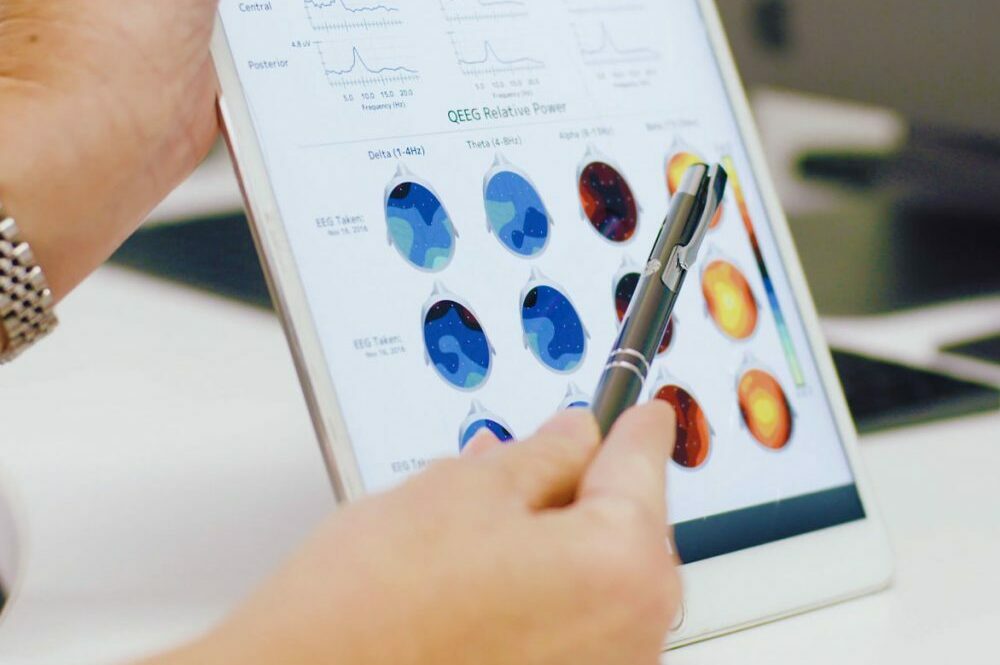
In children with autism, these patterns are often measurably different from neurotypical brain activity. Where a neurotypical brain tends to show dominant alpha-wave activity, we frequently see an irregular mix—elevated beta waves combined with slower delta and theta frequencies. That disruption in rhythm affects how efficiently the brain communicates with itself.
Seeing the map doesn’t just guide treatment. For most families, it’s the first time something they’ve been observing in their child for years has a visual explanation.
Treatment with MeRT is calibrated directly to what the map shows, which is why no two treatment protocols are the same.
What Progress Looks Like on an EEG

We track your child’s brain activity throughout treatment with regular follow-up EEGs. The changes are measurable and visible.
Each column shows an EEG reading taken at a different point during treatment. The red box highlights the alpha wave range—the frequency most associated with calm, focused attention and efficient brain communication. Notice how the peak within that range becomes more defined and consistent across sessions. That shift reflects the brain moving toward a more organized, regulated pattern. It’s what guides every adjustment Dr. Miller makes along the way.
Research Supporting EEG-Guided rTMS for Autism
EEG-guided rTMS, the core technology used in MeRT®, has been studied for its potential role in supporting individuals on the autism spectrum. Research suggests that targeted magnetic stimulation may help influence brain activity patterns associated with communication, sensory processing, and behavioral flexibility.
Below are examples of peer-reviewed studies exploring the use of rTMS and EEG-guided neuromodulation in autism:
A systematic review of transcranial magnetic stimulation treatment for autism spectrum disorder, published May 31, 2024. https://www.cell.com/heliyon/fulltext/S2405-8440(24)08282-3
“After TMS intervention, discernible enhancements across a spectrum of scales are evident in stereotyped behavior, repetitive behavior, and verbal social domains. A comprehensive review of literature spanning the last five years demonstrates the potential of TMS treatment for ASD in ameliorating the clinical core symptoms.
“Recent findings generally indicate that TMS has positive effects on stereotypical behavior, repetitive behavior, verbal and social aspects of ASD, leading to overall improvement across all scale scores post-intervention.”
Autism spectrum disorders: linking neuropathological findings to treatment with transcranial magnetic stimulation, published April 2015.
https://pubmed.ncbi.nlm.nih.gov/25626149/
“Several rTMS trials in ASD have shown marked improvements in motor symptomatology, attention and perceptual binding.
“Conclusion: rTMS is the first therapeutic attempt at ASD aimed at correcting some of its core pathology.”
Outcomes from Individual Alpha Frequency Guided Repetitive Transcranial Magnetic Stimulation in Children with Autism Spectrum Disorder – A Retrospective Chart Review. – Uchenna Ezedinma1, Piotr Swierkowski2, Shauna Fjaagesund, 2022. https://pubmed.ncbi.nlm.nih.gov/36367616/
“Conclusion: This study presents evidence on the efficacy and safety of α-rTMS in improving ASD symptoms, quality of life, and comorbid sleep troubles in children. However, these findings should be interpreted as preliminary pending the presentation of double-blind, randomized clinical trials.”

And more…
Transcranial Magnetic Stimulation in Autism Spectrum Disorders: Neuropathological Underpinnings and Clinical Correlations, published June 24, 2020. https://www.ncbi.nlm.nih.gov/pmc/articles/PMC7477302/
“TMS is a non-invasive therapeutic intervention capable of modulating evoked and induced gamma oscillations and altering maladaptive behaviors83. Recent reviews of the literature suggest that TMS is safe and effective when used in ASD.”
Repetitive transcranial magnetic stimulation modulates long-range functional connectivity in autism spectrum disorder, published April 2023. https://pubmed.ncbi.nlm.nih.gov/36841084/
“The findings of this study demonstrate that high-frequency rTMS over the parietal lobe is potentially an effective strategy to improve core symptoms by enhancing long-range connectivity reorganization in ASD.”
Impact of repetitive transcranial magnetic stimulation on the directed connectivity of autism EEG signals: a pilot study, published December 2022. https://pubmed.ncbi.nlm.nih.gov/36282407/
“rTMS provides changes in connectivity and behavior, suggesting its potential use as a viable treatment option for ASD individuals.”
Emerging Research on Sleep and Quality of Life in Autism
Sleep disruption is one of the most common and exhausting challenges families face. When sleep improves, regulation, attention, and daily functioning often improve as well. That’s why recent research examining alpha rhythm–guided rTMS (MeRT Treatment) is so important.
A study published in Research in Autism Spectrum Disorders reviewed clinical outcomes in 36 children with Level 2 and Level 3 autism who completed nine sessions of alpha-guided rTMS. Researchers found statistically significant improvements in overall sleep quality, including sleep duration, reduced night waking, and less daytime sleepiness. Quality of life scores also improved across emotional, social, and school functioning domains.
In a separate randomized waitlist-controlled trial published in Sleep Advances, children receiving 10 sessions of alpha-guided rTMS showed greater improvements in sleep compared to controls. Objective sleep studies showed measurable gains in sleep efficiency and reductions in waking after sleep onset. Improvements persisted for up to four months following treatment and reported side effects were mild and transient.
While additional large-scale studies are still needed, this emerging research supports continued investigation into EEG-guided, personalized neuromodulation as a potential tool for improving sleep and daily functioning in children with autism.
A Father Shares His MeRT Story
Excerpted from Autism Parenting Magazine
“In the third week, something happened. The family was driving around sightseeing when they realized that they were getting lost in the California desert. Mary and Frank began to argue, and right in the midst of it, the moment they had waited six years for finally came. ‘I remember he said a seven-word sentence basically to the effect of, “I want you two to stop fighting.” And it shocked me so much that I almost stopped breathing,’ Frank recounts. ‘I looked at my wife and said, “Do you realize what just happened? He just said a seven-word sentence.” I had tears in my eyes, and I was happy at the same time.’
“From there, Frankie’s progress snowballed. They returned home after only a month, but the difference between the child who arrived in California and the one who left was striking. They had taken a video of Frankie on the plane when they started the journey, ‘and he’s just making baby babble,’ Frank says. ‘We have another video of him on the plane coming back. And he looks out the window and says, “Goodbye, California, see you soon.” This was a nonverbal kid, 30 days later. And his feet are flat on the ground.’
“Doctors said Frankie would continue to improve even without regular MeRT, albeit a bit slower. Today, he is 11 years old, verbal, and attends a public school. He tells Frank stories about times when he wanted to speak but couldn’t. ‘He goes, “You know, I’m so glad we went to the brain treatment [center] because now I can talk,”’ says Frank.
Contact our New Patient Coordinator
for more information. Or fill out the form below.
Successes
The following testimonials show some of the incredible results people are getting from MeRT treatment for Autism at the Brain Treatment Center.
“After trying various treatments and conducting thorough research, we decided to travel from our home in Illinois to the Brain Treatment Center in Dallas. It was the BEST decision we could have made for our six-year-old son, who has severe apraxia and is on the spectrum.
“After six weeks of MeRT treatment, our son said his name for the first time! He has been more flexible with his daily schedule, OCD tendencies have lessened tremendously, and he does not become as anxious as he had previously experienced in new places and surroundings.
“We cannot thank Dr. Miller and his staff enough for the kindness, care, and genuine concern they have shown (and continue to show) our son and our family. They are always available for questions, concerns, and they truly support all patients and their families. For our family, MeRT and the Brain Treatment Center have been a journey worth the endeavor!”
the Korczak family
Parents of child with autism“My experience here has been life-changing. My 15-year-old son with autism, after only three weeks of treatment, has already begun to show great improvement.
“He is less aggressive, his speech is more fluent, and he is finally sleeping throughout the night. It’s like a light switch has been turned on.”
Parent of a child with autism
“My daughter was non-verbal before MeRT. We had MeRT on August 14-September 8, 2023. She started repeating what I said (in Spanish) yesterday! I can only credit MeRT for this!”
Mother of a child with autism
“Last day of MeRT! He had a six-week treatment. Had great feedback from his teachers about how he is so much more alert and engaged than they have ever seen him. Huge improvement in mood, much less irritated, and his depression is gone after 4 years! Benefits continue to come post-treatment. I think in 3-4 months, I will do another qEEG and track his post-treatment.”
Parent of a child with autism
“We did six weeks of MeRT, and the last session finished last week. Major gains we have seen:
“Speech would be the biggest part, trying to describe things and trying to form sentences; his therapist is shocked at how much he is talking now.
“Sleep: my child slept well prior to MeRT, but there was lots of flipping around the middle of the night. Now, no more flipping; sleeps through the night for 10-12 hours (wow, I know).
“Hyperactivity has reduced. He is playing more games and stays in the same game for a longer period.
“He’s trying more varieties of food and will ask to try new food.”
Parent of a child with autism
“My kiddo is finishing up her last two weeks of treatment and I cannot be more excited about the gains/progress we have had in the last six weeks. She was very aggressive, had high anxiety, and had no eye contact when talking. One to two words when communicating. Now we can have a relay back-and-forth conversation at least three times with a lot more words. No meltdowns.
“She has become more social with her sibling and peers at school. Better sleep hygiene. Independent with her hygiene morning routine and improvements in school.
“We will do maintenance at the end of the summer for 2-4 weeks.”
Mother of a child with autism
“My 10-year-old daughter just finished MERT. Even though she is an older kid, the change in the back of the brain was pretty significant, and in the middle and front parts, we see better alpha and lower theta and beta.
“I am good with the charts. How about in real life? We will see when she goes back to school next week. But we see better speech, more patience, better play time with her younger sister, and better understanding and follow up on directions given.
“Side effect? Didn’t see any headaches or anything. She got really ‘hangry,’ but after the last session, that is gone. The clinic explained it was normal as the therapy was pushing the brain to work out, so she might have felt more hunger.”
Parent of a child with autism
Watch this show and find out how MeRT treatment can provide new hope for parents who have tried everything for their child with ASD.
Dr. Spencer Miller Discusses MeRT on “The Doctors” TV Show
Dr. Miller spoke about MeRT treatment as a breakthrough autism treatment on an episode of “The Doctors.” In this episode, Dr. Miller, who has worked with hundreds of MeRT patients, explains how this treatment reprograms electrical signals in the brain. A mother also shares her incredible story about her daughter and the results of MeRT when used for Autism Therapy.
Starting as a New Patient
When you start as a new patient at the Brain Treatment Center Dallas, you will initially need two appointments, approximately two days apart. Both appointments will last about an hour.
Initial Testing
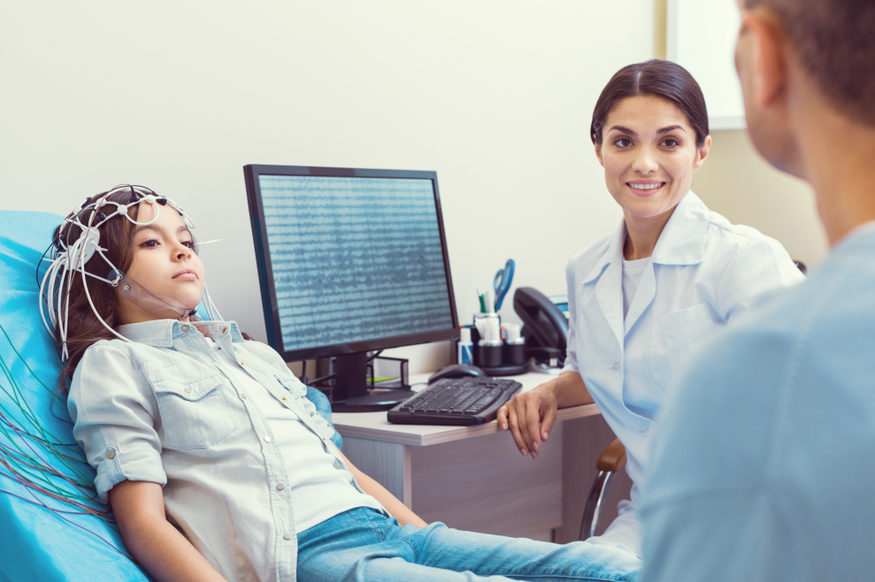
At the first appointment, we will go over your reasons for seeking help, your medical history, your health goals, and all of your symptoms. You will then begin initial testing, which will involve an EEG and an EKG. These are both completely painless and easy and done right in our office. We then send your information and test results to our scientific and clinical teams, who will carefully analyze the results and determine the current state and functioning of the brain together with Dr. Miller.
We use a patented, scientific approach with the neurophysiological data gathered through testing to develop a highly customized treatment plan aimed at encouraging healthy brain communication and function.
Consultation
At your second appointment, you will meet with Dr. Miller for a Consultation. He will discuss your test results and whether he and our scientific team feel you may achieve results through our treatment protocol. This appointment will also address questions you may have.
After the second appointment, Dr. Miller will outline your individualized treatment plan and the protocols to be followed for the best results. At that point, you may discuss fees, length of treatment, and schedules, and then decide whether to go forward and schedule your treatment.

Test Run – The Assessment
We deliver the MeRT protocol using TMS. You simply sit in a comfortable chair while a trained technician carefully positions a simple device on your head. This device produces a magnetic field to induce mild electrical currents in the targeted regions of the brain. There is no pain and no electrical currents, just a slight sensation.
We will perform an additional EEG and EKG after about a week of treatment, allowing us to assess progress and make any needed modifications. In this way, we are always taking the best and most exacting approach based on the current neurological state.
Contact our New Patient Coordinator for More Information about MeRT
When many patients come to see us, they have lost hope, as they don’t see any light at the end of the tunnel.
It’s rewarding as a practitioner to help so many people realize a much better “normal” and improved quality of life.
If you have questions or would like to discuss our treatment protocols, we offer a free consultation by phone.
Our New Patient Coordinator will take the time to listen and explain. She can answer most questions and discuss our protocols, scheduling, fees, and other relevant details. She is happy to assist you in any way she can.
Please call us to get more information about how our clinic and Dr. Miller may help you with your health goals and to schedule an initial screening to see if MeRT may be an option.
Contact our New Patient Coordinator
for more information. Or fill out the form below.